

Stewardship Corner: Dethroning Kudzu, One Root Crown at a Time
Often called “the vine that ate the South,” kudzu (Pueraria montana) is a non-native, invasive vine that can grow up to a foot per day under ideal conditions. Like many invasive species, kudzu thrives outside its native range in part because it has few natural predators to keep it in check. Above ground, it climbs over, outcompetes, and smothers the vegetation in its path, leading to biodiversity loss. Invasive plant management usually starts with that above-ground growth, but with kudzu, that alone doesn’t cut it.
Kudzu does reproduce by seed, and seedlings in younger populations are relatively easy to control with foliar (spray) treatments. Its primary means of expansion, however, is vegetative: rhizomes, runners, and nodes that take root wherever they touch soil. That makes kudzu especially difficult to control in floodplains, where alluvial soils bury rooting nodes under layers of sediment.
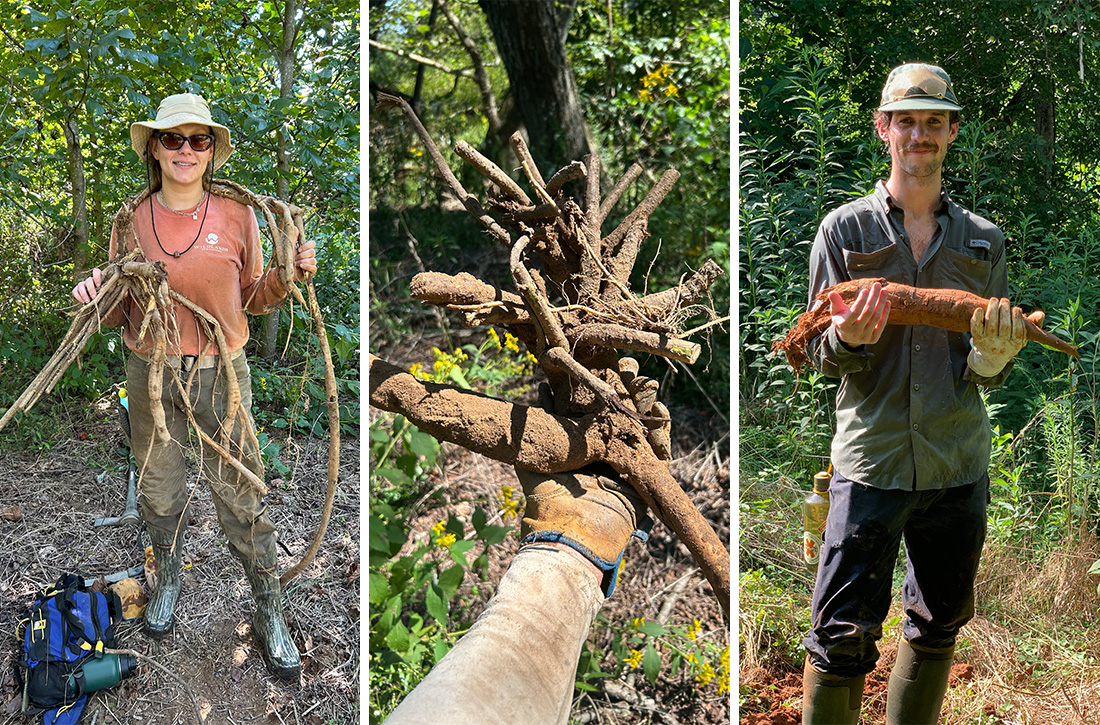
Below the surface, kudzu stores energy in a large taproot. Persistent cutting, mowing, or foliar herbicide treatments can wear the vine down, but because the taproot holds so much energy, above-ground treatments usually just knock kudzu back until it resprouts. To truly dethrone kudzu, you have to get to the root of the problem. Crews trace each vine back to where it’s rooted, dig down, and sever it below the root crown, the point where the vines emerge from the root, disconnecting the plant from its energy source. A combination of above- and below-ground treatments is the most effective way to get ahead of a kudzu infestation.
At Wildlands, invasive species control is built into the life of a project. When a site contains kudzu, our land stewards often begin removing it before construction starts, treating vines and cutting out root crowns so the infestation isn’t spread across the site as soil is moved and the land is reshaped. Once construction wraps up, the work continues. Stewards return to monitor the site, and if kudzu resurfaces, they address it quickly before it can take hold. This early and ongoing attention gives native plantings the space and sunlight they need to establish, helping each restoration project grow into the healthy, resilient ecosystem it was designed to be.
Written by Wildlands Land Steward, Emily Israel